
General information, not legal advice. Insurance policies differ, and only your policy and your insurer can tell you what you are covered for. This page explains the general picture so you know what to ask.
In a karst city like Bowling Green, the question comes up fast: if the ground under my house moves, will insurance pay? The honest answer is that it often does not, and the reasons are worth understanding before you file anything or sign a repair contract. Below is what standard homeowners policies generally say, what Kentucky's mine subsidence fund does and does not do, and where Warren County stands.
Does a standard homeowners policy cover sinkholes?
Generally, no. Standard homeowners policies generally exclude earth movement, a category that typically includes settling, subsidence and sinkholes. That exclusion usually applies whether the movement is slow, like a corner of the house settling into soft clay, or sudden. Ensuing damage, such as a fire that starts because of the movement, may be covered depending on the policy wording.
So the starting point is simple: ask your insurer what your policy covers. Read the "earth movement" section of your policy and any endorsements. Some states require insurers to offer sinkhole coverage; our research found no such confirmed requirement in Kentucky, so don't assume an option exists, but do ask whether your company offers any endorsement.
Is foundation settling covered?
Ordinary settling and cracking are usually treated as wear, maintenance or earth movement and are commonly excluded. That is why most foundation repair in Bowling Green is paid for out of pocket. If you are budgeting, the foundation repair cost guide lists typical national ranges for piers, crack repair and wall repair.
What is Kentucky's Mine Subsidence Insurance Fund?
Kentucky has a Mine Subsidence Insurance Fund, created under KRS 304.44. It is often mentioned in sinkhole conversations, but it covers something specific: damage from "the collapse of underground coal mines." Its plan excludes things like earthquake, landslide, water seepage and the collapse of storm and sewer drains.
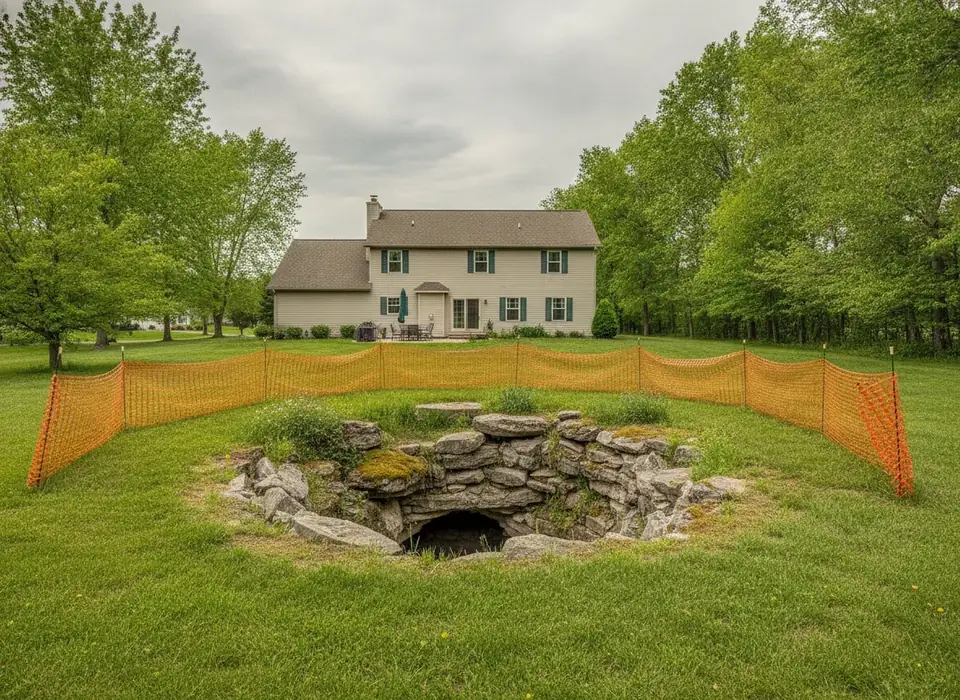
Key point: karst sinkholes are not coal mines. Even where mine subsidence coverage is available, it never covers karst sinkholes formed by dissolving limestone, which is the kind of sinkhole Bowling Green is known for.
Is Warren County in the mine subsidence program?
It is unclear. Warren County has coal-bearing strata, making it an eligible location, and its fiscal court voted to join the program in 2009, according to a Kentucky Department of Insurance bulletin. But Warren County does not appear on the 2024 list of qualified locations in the fund's draft plan of operation. It may have opted out since, or the list may differ from current practice. If you want to know whether mine subsidence coverage is available on a Warren County home, ask the Kentucky Department of Insurance or your insurer directly. And remember, even if it is, the coverage is for coal mine subsidence only.
Nearby counties such as Barren, Allen, Simpson and Logan are not eligible counties at all, according to the same research.
What should you ask your insurer?
Before you assume anything, call your agent or company and ask, ideally in writing:
- Does my policy exclude earth movement, and how does it define it?
- Are sinkholes, settling or subsidence specifically named?
- Is any sinkhole or earth-movement endorsement available, and what does it cost?
- If damage results from a covered cause, such as a burst pipe or fire, how is the ensuing damage handled?
- Is mine subsidence coverage available at my address?
- Do you need an inspection or engineer's report before I start repairs?
If something in your policy is unclear, the Kentucky Department of Insurance is the state agency that oversees insurers and can explain how to get help with a question or complaint.
How to document foundation or ground movement
Whatever your coverage, good records help: they help an engineer, help contractors quote the same scope, and help if you later sell the house. This is about recordkeeping, not claim strategy.
- Photos with dates. Photograph cracks, gaps and yard depressions, and put a ruler or coin in the frame for scale. Retake the same shots every few weeks.
- Simple measurements. Mark the ends of a crack with a pencil and date it, so you can see whether it grows.
- Weather notes. Note heavy rain events. In April 2025, Bowling Green got more than 10 inches of rain in four days, and the city responded to at least 18 new sinkholes. Timing can matter to anyone evaluating the cause.
- Keep paperwork. Save every written estimate, engineer's report, permit and invoice.
- Get an independent opinion when it matters. A contractor's free evaluation is a sales estimate, not an engineering opinion. A report from a Kentucky-licensed professional engineer (PE) typically runs $300–$2,000.
Who handles a sinkhole that is not under the house?
If a sinkhole opens on public land, in a street or connected to a stormwater structure, report it to Bowling Green Public Works Stormwater at 270-393-3628. The city has repaired many sinkholes in recent years, including a roughly 50-foot backyard sinkhole filled with about 250 loads of rock in September 2025. Whether the city handles one on private property depends on the circumstances, so call and ask. For background on why this happens here, read Bowling Green karst, sinkholes and your foundation.
If insurance won't pay, what are the options?
Most homeowners compare written quotes and pay for the repair directly. Depending on the cause, that might mean piers driven to rock, crack repair, drainage changes or grouting. The sinkhole and karst settlement repair page explains common approaches, and piers and house leveling covers pier types. Ask each company for the warranty in writing: term, what voids it, whether it transfers to a buyer and any transfer fee.
Also, if you sign a contract at home, Kentucky's home solicitation sales law (KRS 367.410–.460) lets a buyer cancel until midnight of the third business day, with a required "BUYER'S RIGHT TO CANCEL" notice; there is an emergency-repair exception. Again, general information, not legal advice.
Get free local quotes
We connect Bowling Green-area homeowners with independent local foundation repair, crawl space and waterproofing companies for free, no-obligation quotes. We don't sell insurance or handle claims. If you need repair pricing, request free quotes here.